Across emerging markets, economic recovery often begins with a simple but powerful question: how do people participate in the economy? The answer, time and again, starts with payments.
With a population of nearly 25 million, Syria is at a formative moment and seeking pathways to rebuild amid high cash dependency, informality, and constrained liquidity. Secure, interoperable, and widely accessible payment systems are the bedrock of economic recovery, restoring confidence, enabling commerce, and reconnecting markets to regional and global trade.
This conviction underpins Visa’s focus on Syria today.
From Intent to Action
Last year, Visa announced a collaboration with the Central Bank of Syria to support the development of a strategic roadmap to modernize the country’s payments ecosystem. Aligned with our mission to uplift everyone, everywhere, Visa intends to support the creation of a phased, future‑ready payments infrastructure plan built on global standards.
The immediate focus is foundational by working with licensed financial institutions, where we are supporting the development of secure payment rails. These standards ensure security from day one and enable interoperability with regional and international networks — a critical requirement for economic reintegration.
Merchant acceptance is equally essential. We aim to enable low-cost, open acceptance solutions through various technologies, accelerating access to digital payments for micro, small, and medium enterprises. SMEs form the backbone of Syria’s economy and when they can accept digital payments, they gain efficiency, resilience, and the ability to grow.
Supporting Digital Transformation
Payment modernization is also part of a broader digital transformation agenda.
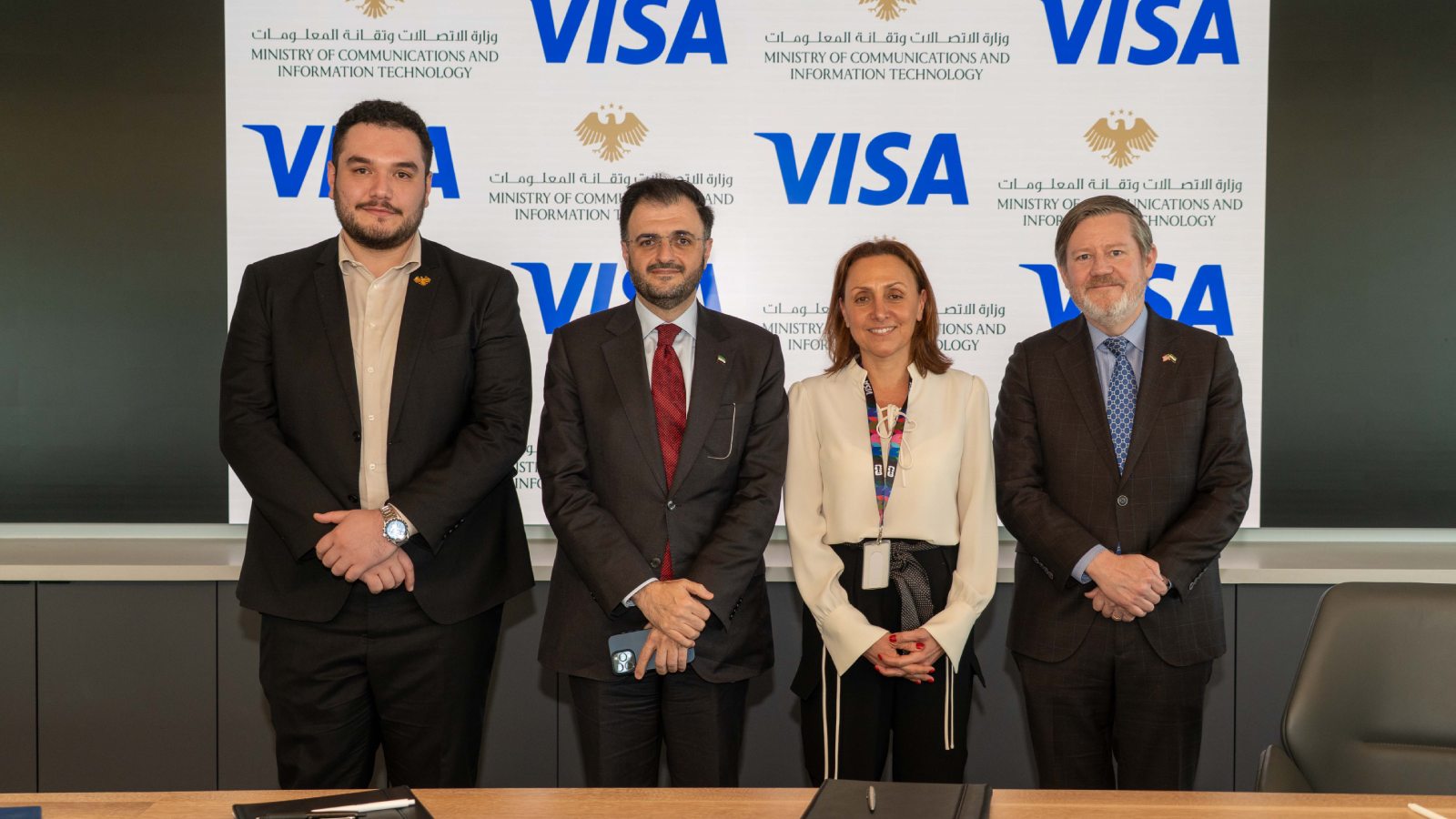
Visa recently signed a cooperation agreement with Syria’s Ministry of Communications and Information Technology (MOCT). The agreement establishes a collaboration framework to advance digital infrastructure, financial inclusion, fintech innovation, including the development of a regulatory sandbox framework tailored to Syria’s digital economy.
This collaboration aims to unlock greater participation in the digital economy for micro, small, and medium enterprises, upskilling and capacity building initiatives, and access to Visa’s consulting services — all aimed at supporting Syria’s broader digital economy plans.
Why Payments Matter for Syria
The link between digital payments and economic growth is well‑documented.
Research by the Bank for International Settlements¹, covering more than 100 economies, shows that every one-percentage‑point increase in digital payment usage is associated with a 0.10 percentage‑point increase in GDP per capita growth over two years, alongside reductions in informal employment and improved financial inclusion. Analysis from the International Monetary Fund², reinforces that digital payment systems are critical to expanding financial access, formalizing economic activity, and improving the efficiency and resilience of domestic economies.
Syria’s cash‑based economy limits access to modern financial services, constrain transparency, suppress productivity, and limit the ability of small businesses to scale. Digital payments will not eliminate cash overnight — nor should they. But they can restore liquidity, enable commerce, and rebuild trust.
This is especially critical for small and micro‑enterprises, who benefit from better record-keeping, lower transaction friction, and greater access to formal finance. Over time, this formalization supports productivity, resilience, and job creation.
Starting with Infrastructure
Sustainable payments ecosystems depend on open, interoperable systems that are secure, scalable, and aligned with global standards. Visa’s experience across more than 200 markets shows that durable progress comes from building the rails first — security frameworks, acceptance networks, and risk controls — before layering innovation on top.
This is where Visa’s role as a platform is critical. We connect consumers, merchants, financial institutions, fintechs, and governments through shared standards that enable interoperability and trust. Equally important, payments transformation is about people. Knowledge transfer, capacity building, and local talent development are critical to ensuring systems are both launched and sustained.
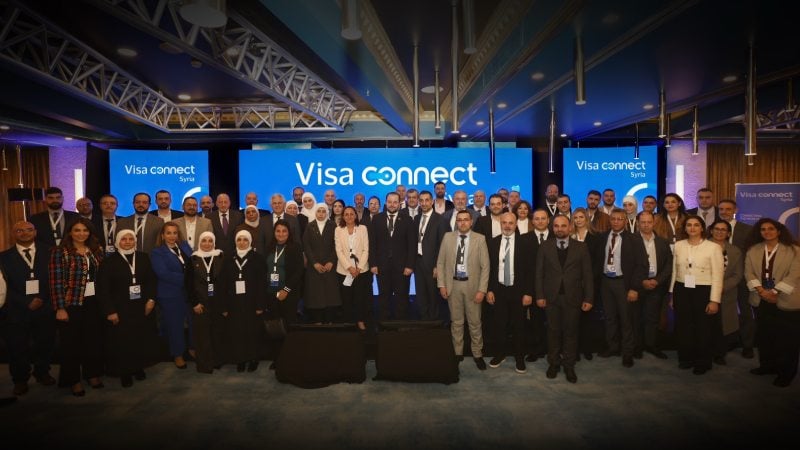
That is why Visa has invested on the ground. We hosted Visa Connect Syria in Damascus — convening banks, regulators, ecosystem partners, and policymakers for an industry forum— followed by a technical workshop with the Central Bank of Syria. Progress accelerates when ecosystems align around standards, capabilities, and shared priorities.
Looking Ahead
Syria’s path to economic recovery will be shaped by its institutions, its entrepreneurs, and its people. Payments infrastructure will not solve every challenge — but without it, progress will remain fragmented and fragile.
Visa’s approach is grounded in a simple conviction: we must build with local players, not for them. By anchoring our engagement in global standards, evidence-based impact, and long‑term partnership, we aim to help lay the foundations for inclusive and sustainable growth.
At Visa, our mission is to help everyone, everywhere, pay and be paid. In Syria, that mission begins with infrastructure, collaboration, and a deep belief in what becomes possible when economies are given the tools to participate, connect, and grow.
¹ https://www.bis.org/publ/work1196.htm
² https://www.imf.org/en/topics/digital-payments-and-finance & IMF Financial Access Survey 2025