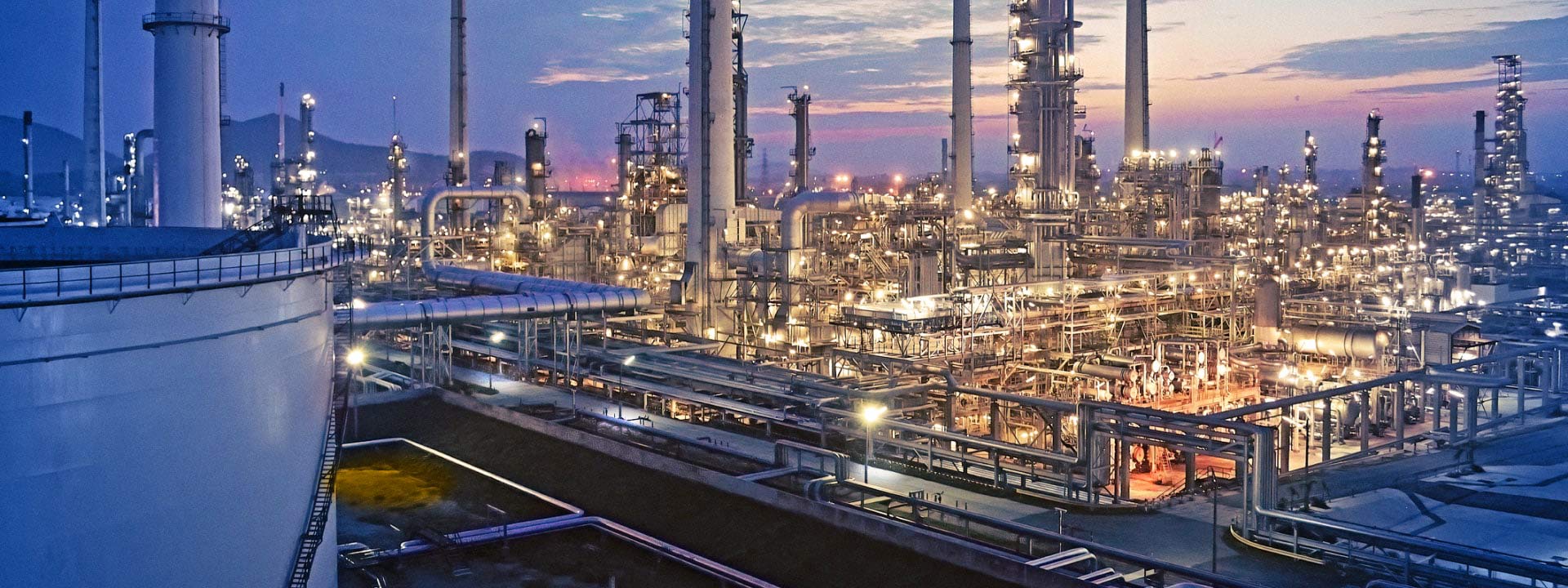
The North American oil and gas landscape
North American oil and gas markets represent about $1.4 trillion in annual revenue.¹ 95% of businesses in the North American oil and gas market are small businesses, while a few large companies account for most of the output.² Currently, North America's revenue is projected to grow by 4% by 2032.³
Headwinds and tailwinds shaping payments
Operating conditions change quickly in energy. Political climates, sanctions, tariffs and other global factors can quickly trigger market changes that also affect payment needs.
At the same time, investments in sustainable energy, low-carbon solutions, ESG and broader automation, as well as digitalization efforts are pushing organizations to modernize finance operations, including payments.
Oil and gas operating model

Upstream

Midstream

Downstream
Different priorities but common challenges
While each stream has different operational priorities, payments is a shared dependency across all three. When payment processes are slow or inconsistent, the ripple effects show up as delays in field work, more exceptions from clerical staff and tighter supplier credit.

Help keep work on track and protect capital
Upstream organizations prioritize cost and efficiency, predictable cash flow, and integration across production and accounting. Some upstream payment flows remain manual. Long supplier payment cycles (90+ days in some cases) can create liquidity pressure for service partners and increase the operational burden of dispute resolution.

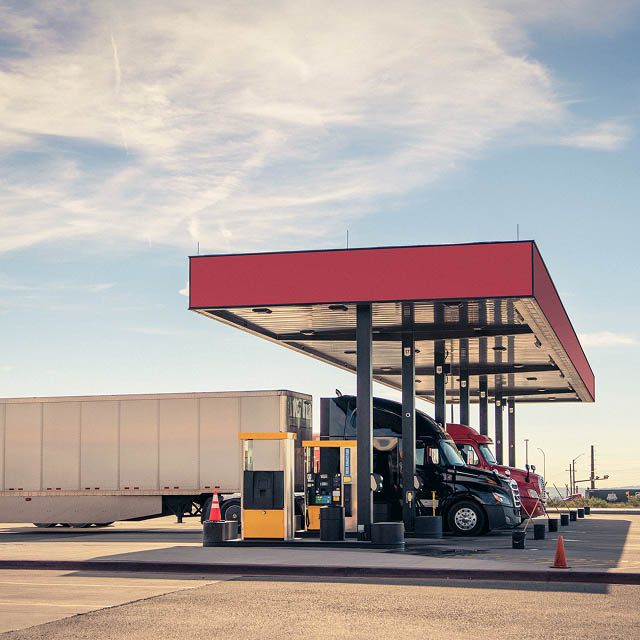
Common pain points for suppliers
Oil Field Services Providers (OFSPs) play a crucial role in the energy economy. They support everything from drilling and well services to logistics, equipment rental and site maintenance. Many are small businesses that rely on steady capital to cover payroll, support field operations and invest in equipment. Access to working capital can present a challenge in the following ways:
- Extended, unpredictable DSO: Payment terms often stretch to 60-70+ days—with some cycles exceeding 90 days.⁶
- Reliance on expensive short-term financing: When cash flow is uncertain, suppliers may turn to invoice factoring or other short-term financing to cover the shortfall, which reduces margins and long-term flexibility.
Optimization for better outcomes
Optimizing payment flows isn’t just about paying faster. It’s about creating a process that’s predictable, trackable and scalable. For oil and gas companies, that usually means:
- Accelerating supplier settlement without pulling forward corporate cash outflows
- Reducing invoice exceptions by improving data quality and reconciliation
- Creating transparency into money movement and working capital impacts
- Integrating payment execution and reporting into existing AP/AR and ERP systems
Solutions that address these challenges can enable organizations to reduce time spent on administrative tasks and increase focus on key business objectives.

Why Visa Commercial Solutions
Visa Commercial Solutions enhances B2B payments by integrating commercial card and virtual payment options with data and reporting tools. In the oil and gas industry, this can help suppliers get paid fast and predictably, while improving visibility and reducing operational challenges.
- Accelerated payments and reduced DSO
- Automated invoice generation and reconciliation
- Extended payment terms (for example, net 60/90) through card settlement cycles
- Fraud reduction and secure transactions
- Cash flow traceability and transparency
- Integration into existing accounting and ERP systems for reporting
A working capital engine for the entire industry
In a traditional invoice-driven process, suppliers may wait 60–70+ days to get paid. Accepting card payments is cited as the second-most common strategy to reduce DSO, often to around 19–21 days.⁶ At the same time, buyers who pay with cards can align cash outflows with the card statement due date, thereby maintaining or extending DPO.
Let the payments flow
When cash is delayed, suppliers feel it in the field. When data is missing, finance teams feel it in rework, which can be especially costly to the 95% of small oil and gas producers in the U.S.² And when payments are opaque, leaders can lose clarity into where working capital is tied up.
Visa Commercial Solutions can help modernize payment operations across the value chain — accelerating supplier settlement, improving reconciliation and strengthening resilience across a fragmented ecosystem. The outcome is a payment experience designed for speed, security and scale.
- Euromonitor International, Industrial data (Energy sector, North America), based on trade sources and national statistics.
- Council, SBE. “NEW STUDY: Oil, Natural Gas, Our Economy and Small Business”. Retrieved May 12, 2026 from new study: oil, natural gas, our economy and small business.
- IBIS World. “Biggest Industries by Revenue in Global in 2026”. Retrieved May 12, 2026 from biggest industries by revenue in 2026.
- J.P. Morgan. “Now is the time to digitize oil and gas royalty payments”. Retrieved May 12, 2026 from digitizing oil gas royalty payments.
- S&P Global “S&P Capital IQ.” Retrieved May 12, 2026 from essential intelligence: S&P capital IQ platform log in.
- Inc. “Unpaid Customer Invoices Are Piling Up, Squeezing Small Businesses” Retrieved May 12, 2026 from unpaid customer invoices are piling up, squeezing small businesses.
- 2025–26 Visa Growth Corporates Working Capital Index.
This document is intended for illustrative purposes only. It contains depictions of a product, service or solution (the "Product") currently in the process of development or deployment and should be understood as only a representation of the potential features of a fully deployed Product. Visa is under no obligation to make this Product available, and versions of this Product, if any, may not contain the features described in this document.